Day of the Dead (Día de los Muertos) and the Ofrenda Tradition
Before the Spanish conquest, the Aztecs and other indigenous peoples of central Mexico held annual ceremonies to honor the dead. These included offerings, rituals, and the use of symbolic items such as skulls, marigolds (cempasûchil), and food to guide and welcome spirits. The Aztecs believed the dead could be honored and communed with, and these practices were deeply tied to their cosmology and the four elements of life: water, earth, fire and wind.
Spanish Influence and Syncretism
When the Spanish conquered Mexico in the 16th century, the Catholic Church sought to integrate indigenous death rituals into the Christian calendar. They moved these ceremonies to All Saints’ Day (November 1) and All Souls’ Day (November 2), aligning them with the Christian tradition of remembering the departed. Over time, the solemnity of these Catholic holidays merged with indigenous symbolism, creating the modern Dia de Los Muertos and its altars.
The Ofrenda Tradition
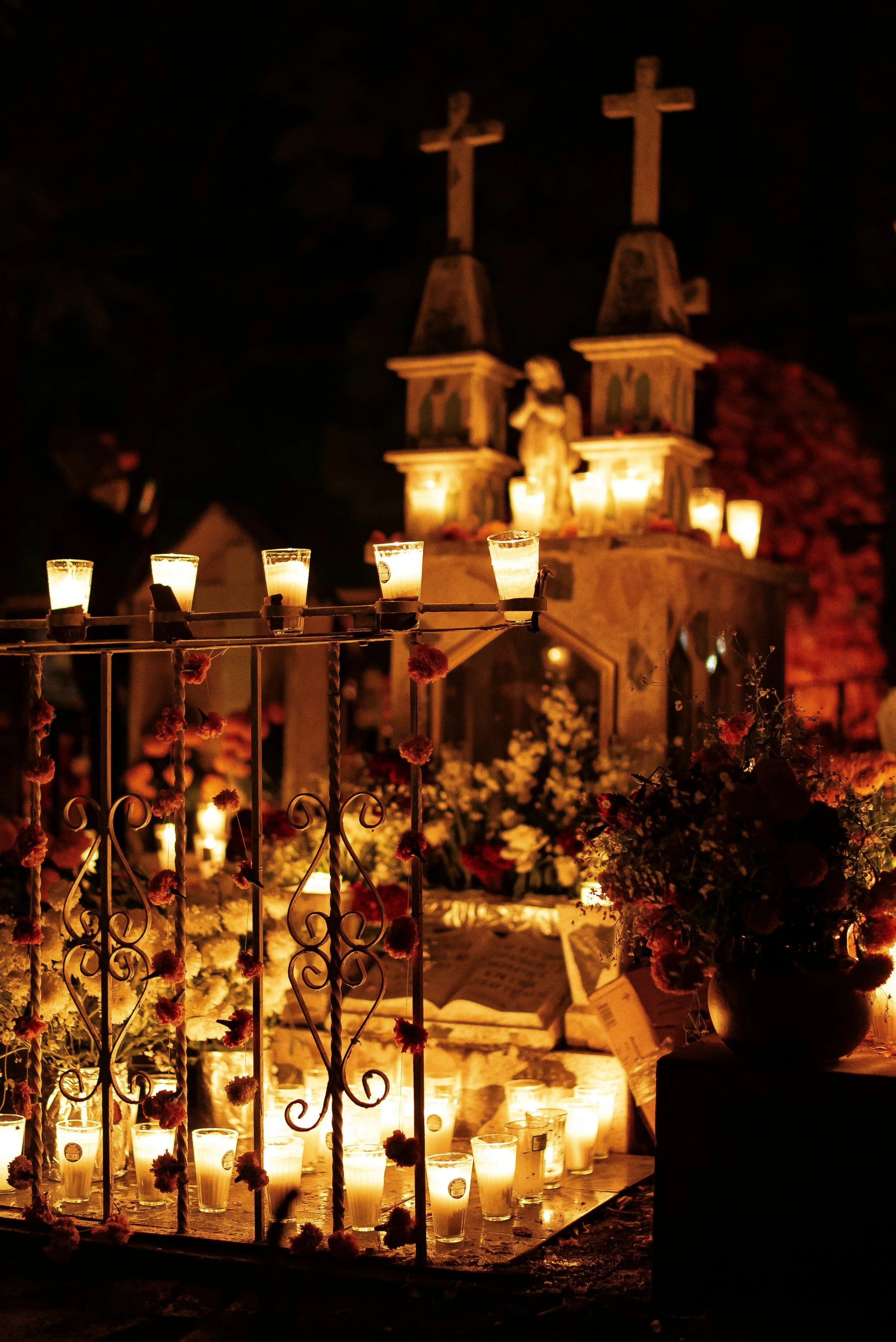
Catholics put a picture of their deceased family members, or friends, on an altar to remember them and to offer the Mass for them on November 1st and 2nd. This year, the Hispanic Ministry at Sacred Heart, will erect an altar in the church with photographs and provided an ofrenda meal for the parish on Sunday, November 1st. They will serve the traditional pan de muerto and Mexican chocolate.