
Deacon’s Corner
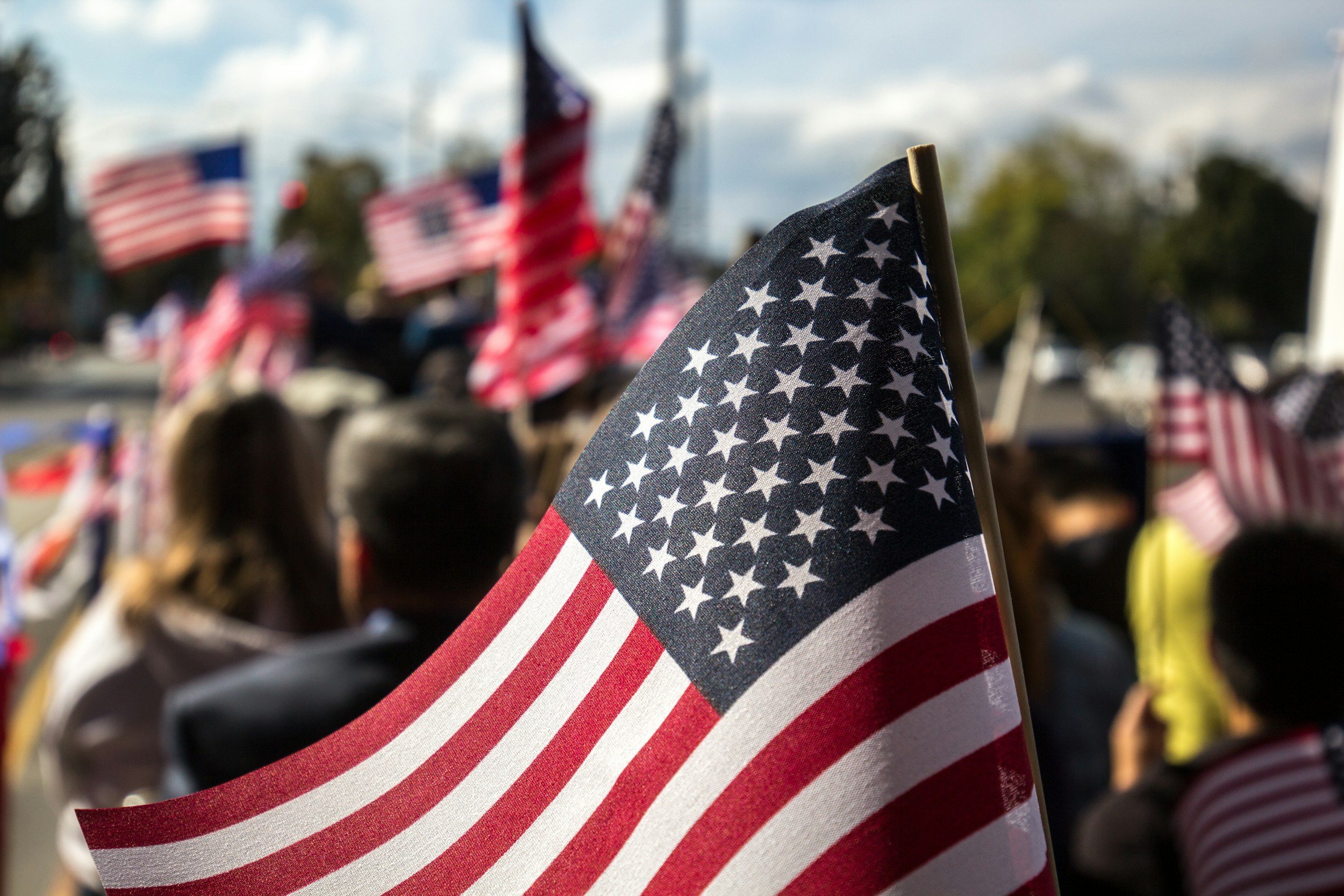
As we celebrate our nation's 250th birthday, I thought it would be appropriate to share some information about one of the main tenets of our Constitution and why so many people immigrated to our country… the freedom of religion. The following article is from mountvernon.org and speaks of George Washington’s views on this subject.
George Washington went past mere religious toleration and established religious freedom for citizens.
He reassured people that the federal government would not prevent citizens from practicing the religion of their choice, or any at all.
Before the age of revolution, religious wars plagued Europe, the Middle East, and North Africa for centuries. Governments were tied to a state-supported religion, and those who did not follow it were persecuted. In some cases, Protestants killed Catholics and in others, Catholics killed Protestants. Jews were expelled from a number of countries. While persecution varied by time and location, it was often merciless. Thousands upon thousands were killed. People of persecuted faiths often had to practice in secret or flee.
As John Winthrop put it, America became a religious “refuge”. Wave after wave of religious groups sought sanctuary in North America. In 1620, a group of Puritans arrived at Plymouth, Massachusetts. Roman Catholics founded Maryland in 1634, and twenty years later Jews arrived in New York City. However, many did not find the peace they had hoped and prayed for.
These 17th-century Massachusetts laws were based on scripture. The General Laws and Liberties of the Massachusetts Colony: At first, these communities in colonial North America looked very similar to the religious states of the Old World. Each religious settlement was founded around the community’s beliefs. Laws were established and expectations set based upon religious ideals. Puritans in New England based laws on the Bible, and only full church members were permitted to vote. Magistrates, considered “public ministers of God,” were expected to use the state to uphold the church’s agenda.
Catholicism thrived in Maryland in the 1630s, but by the 1640s, Protestants took control and deported many Catholics. By 1649, however, Catholics controlled the Maryland Assembly. A Toleration Act—one of the very first of its kind—passed, which allowed both religions, but in 1654, the Protestants regained control. They repealed the act and outlawed the Roman Catholic religion.
Tensions were not just between Protestants and Catholics. Discrimination occurred throughout the colonies. The Quakers were expelled from Massachusetts. Presbyterians and Baptists were banished from New England. In Virginia, Puritans and Quakers were barred. However, during the Great Awakening in the 1740s, there was a growing tolerance of minority religions in some regions of the colonies.
After the Revolutionary War, many played a role in shaping the new government to ensure all religions had the right to practice, including Thomas Jefferson, James Madison, and John Adams. However, it was under the leadership of George Washington that freedom of religion was established, writing while president:
“Being no bigot myself to any mode of worship, I am disposed to indulge the professors of Christianity in the church, that road to Heaven, which to them shall seem the most direct plainest easiest and least liable to exception.”
George Washington was a devout 18th-century Anglican. He regularly attended church and served as both a vestryman and churchwarden. Washington was also tolerant of other religions, writing while president:
“I was in hopes, that the enlightened and liberal policy, which has marked the present age, would at least have reconciled Christians of every denomination so far that we should never again see their religious disputes carried to such a pitch as to endanger the peace of Society.”
There is also evidence that, in addition to Christianity, Washington’s enslaved community at Mount Vernon practiced Islam and other traditional African religions.
Now, you would think that after 250 years of practice we would have all learned to get along with each other. But sadly, that is not the case. We still find there is intolerance in our society and in our world. It is something we all need to work on. We must always remember that we are all created in the image and likeness of God.
In November 2024, Pope Francis shared these words at the “All Religions Conference” held at the Vatican…
A "fundamental truth" shared by "all religions," Pope Francis emphasized, is their teaching that "as children of the one God, we must love and honor one another, respect diversity and differences in a spirit of fraternity and inclusion, and care for one another as well as for the Earth, our common home."
Our great nation is a wonderful blend of people of different nationalities and beliefs, truly a “Melting Pot” of humanity. I believe that this diversity makes us stronger. Our Founding Fathers believed this as well.
While we have come a long way in the past 250 years, we still have a lot to learn. I pray that the next 250 years will be filled with peace and prosperity for all.
Blessings
Dcn. Mike