
The Parable of the Prodigal Son: A Call to Come Home
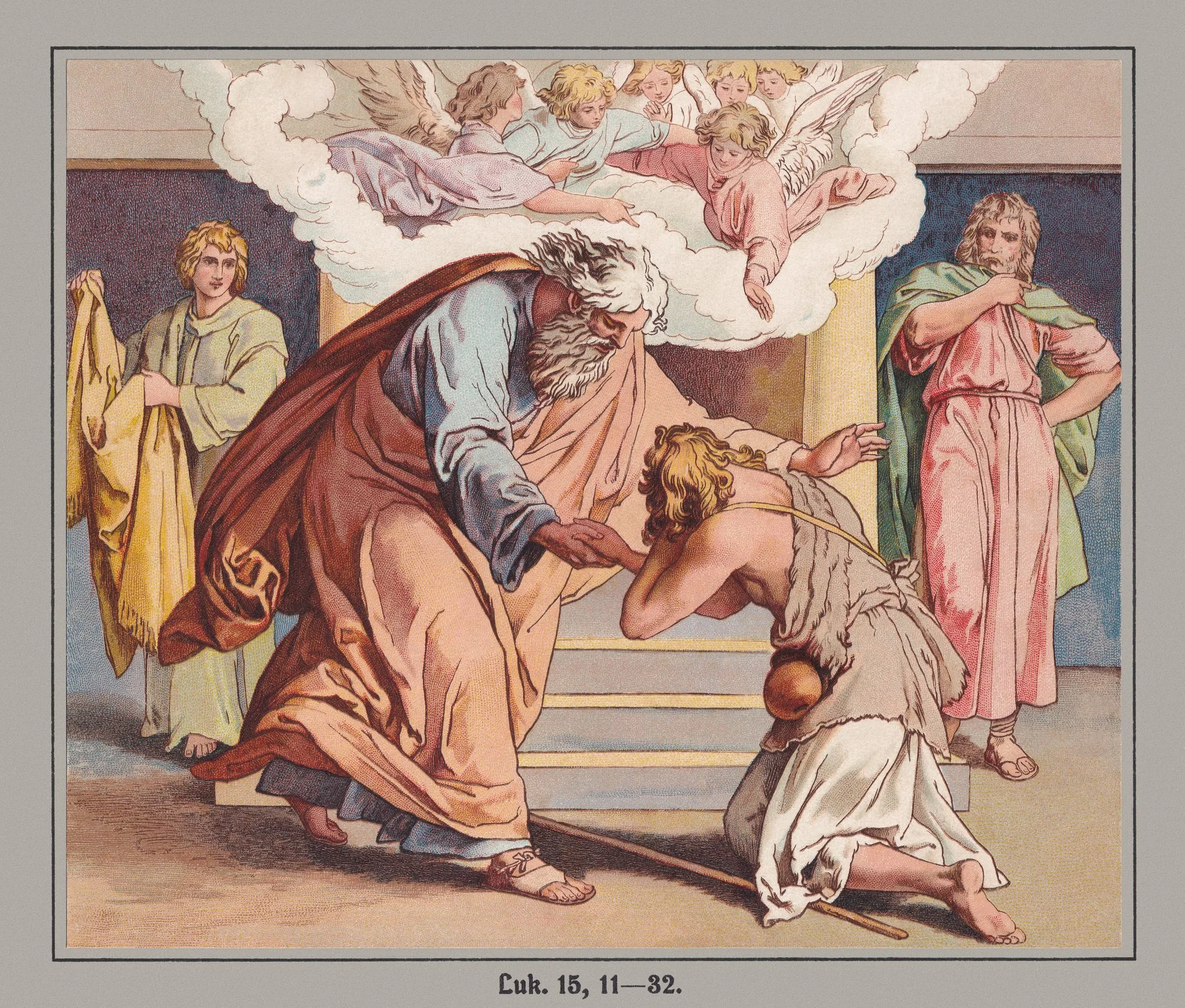
The Parable of the Prodigal Son, found in Luke 15:11–32, is one of Jesus Christ’s most powerful and loved stories. It speaks of a father’s unconditional love and forgiveness for his two sons, and it celebrates the joy of the Sacrament of Reconciliation: “He was lost and is found.”
Here is a recap of the Parable: A father has two sons. The younger son demands his share of the inheritance early, a culturally disrespectful act, and leaves home to squander his wealth in reckless living. When a famine strikes and his money runs out, he takes a humiliating job feeding pigs, an unclean animal in Jewish tradition. Starving and desperate, he longs to eat the pigs’ food but receives nothing.
The pivotal or turning point comes when the prodigal son “came to his senses” (Luke 15:17). Realizing that even his father’s servants lived better than he was living, he resolved: “I will arise and go to my father” (Luke 15:18). He decides to return home, not as a son, but hoping to be accepted as a servant. But while he is still far off, his father sees him, runs to him, embraces him, and celebrates his return with a feast.
The older brother, who stayed home and worked hard, is angry and refuses to join the celebration. The father goes out and gently pleads with him: “You are always with me, and all that I have is yours. But we had to celebrate because your brother was lost and is found.”
This is a fitting message for our Parish as we embark on welcoming parishioners back home to our Sacred Heart family. This parable offers a timely and transformative message for all. It speaks of:
Unconditional Love and Forgiveness
Repentance, Acceptance, Redemption, and Restoration
Grace over Resentment (the older son’s struggle with bitterness and his father’s gentle invitation to forgive and accept)
The father in the Parable represents God, whose love for us is not based on our human perfection. He is always ready to welcome us back, no matter how far we stray. The younger son’s decision to return home shows the power of humility, the possibility and hope of a fresh start. The older brother represents those in our parish who feel overlooked despite their loyalty.
The Parable of the Prodigal Son, along with the Parable of the Workers in the Vineyard (Matthew 20:1–16), challenges our understanding of divine justice. Both call us to trust God’s grace more than human fairness and to recognize divine mercy over earthly rewards.
The invitation to return home in Jesus’ story is more than a lesson; it is a heartfelt invitation that reflects the spiritual journey of many who have strayed from the Church, from faith, and from the loving embrace of God and family.
Luke 15:20 says: “But while he was still a long way off, his father saw him and was filled with compassion for him; he ran to his son, threw his arms around him and kissed him.” This verse captures the heart of God, our loving Father, who watches, waits, and runs to welcome His children with open arms.
Many in our parish today have taken similar journeys, leaving the Church due to hurt, scandal, disappointment, or for the allure of worldly pursuits. But like the prodigal son, they often discover the hard reality that “all that glitters is not gold.” What may seem promising often leads to emptiness.
This parable is not just about one son; it is about both sons and their father. One rebels and returns home. The other stays home but struggles with resentment when his brother returns. And the father? He loves them both deeply.
As the prophet Jeremiah reminds us: “If you look for me wholeheartedly, you will find me” (Jeremiah 29:13). This is the Heart of God speaking to us. Even if we journey to a distant land, God is never far. He waits patiently, longing for our return. With God, no one is ever truly lost.
Let this be a call to every heart that has wandered: Arise, and come home. No distance is too great, no mistake too heavy, no wound too deep. Let the past rest. Let bygones be bygones. What matters now is the embrace that awaits you. The prophet Malachi wrote: “Return to me, and I will return to you, says the Lord Almighty” (Malachi 3:7).
The joy of homecoming is the most beautiful part of Jesus’ parable, expressed by the excited father’s response: “Quick! Bring the best robe and put it on him. Put a ring on his finger and sandals on his feet. Bring the fattened calf and kill it. Let us feast and celebrate. For this son of mine was dead and is alive again! He was lost and is found!” (Luke 15:22–24).
He does not scold or shame his son. He runs to meet him, embraces him, and restores him fully into the family. This is how God receives every soul that decides to return home. And this is how your spiritual family at Sacred Heart Church, Moline, longs to welcome you back.
Come back, and let us forgive past disagreements and move forward. Saint Paul wrote: “Therefore, if anyone is in Christ, the new creation has come: The old has gone, the new is here!” (2 Corinthians 5:17).
All families experience conflict and separation. The younger son could be any one of us. The father’s response, by running to embrace his son without scolding or judgment, is a model of healing through grace, not punishment.
This message is to the whole Church. It is not just for those who have left, it is for those who remain. Let us be like that father, not the older brother. Let us rejoice when someone returns. Let us celebrate their homecoming with restoration and a feast, not resentment.
This is a personal invitation to those who are out there and want to come back to your Sacred Heart family. We say: “Come Back Home. You are missed. You are loved. You are welcome. Our Church is not complete without you. Your seat is still here. Your priests, deacons, and friends are waiting. The whole parish is ready to celebrate your return.”
Jesus said, “I tell you, there will be more rejoicing in heaven over one sinner who repents than over ninety-nine righteous persons who do not need to repent” (Luke 15:7). Jesus said this in the Parable of the Lost Sheep, where the good shepherd leaves ninety-nine sheep that are safe to seek the one lost sheep, celebrating its return back to the fold.
This is a message of repentance and acceptance, revealing that even the return of one sinner brings immense joy in heaven, more so than the righteous ones who did not stray. That is how deeply God treasures every repentant soul. No one is ever lost. No one is beyond His reach.
Right now, Jesus stands before you with arms outstretched, offering a tender loving invitation: “Come to me, all you who are weary and burdened, and I will give you rest” (Matthew 11:28). Right now, in this very sacred moment, if your heart turns back to God, heaven bursts into celebration. Every soul matters. Every return, or homecoming, is a cause for rejoicing.
Remain blessed:
Father Matthew Abu B. Cole, SMA
Parochial Vicar